Further justification for CarbonSAFE Phase II: Storage Complex Feasibility - Northwest Gulf of Mexico
Down-selection of the source, transport, and storage options
A specific high-concentration CO2 source has been identified at the NET Power facility in Houston (La Porte), Texas. NET Power is the company commercializing the natural gas Allam Cycle (see letter of support). NET Power is owned by 8 Rivers Capital, LLC, which is the inventor and developer of the Allam Cycle and serves as the engineering and technology arm of NET Power (see letter of commitment). The La Porte facility hosts a demonstration plant for novel oxy-combustion electricity generation (called the Allam cycle), with goals of becoming an emissions-free source of gas-fired electricity. In order to create growth opportunities and scale up this promising technology, the existing demonstration facility seeks a low risk and economic solution for current CO2 emissions. Because future large-scale gas-fired electricity plants using this technology may be located in regions with no enhanced oil recovery opportunities, there is a need to integrate the plant with saline storage to demonstrate the full value chain in diverse settings. The proposed Phase 2 feasibility project will further develop an offshore CCS storage complex to be sited and permitted for transport and injection to match the available CO2 supply at NET Power, demonstrating zero-emissions electricity generation. During Phase 1, multiple options for transport were observed to be established in this region, including truck, rail, pipeline, and marine vessel. Phase 2 will down select from the viable transportation options, and include preparation of CO2 as a cold compressed liquid for plant offtake, transport by truck and marine vessel, and injection into a fit-to-purpose well. Stakeholder engagement for CCS in the region has begun under Phase 1, including assessment and stakeholder contact, and will continue and expand during Phase 2 to provide education (shown to be needed in Phase 1) and reduce barriers (few identified in Phase 1).
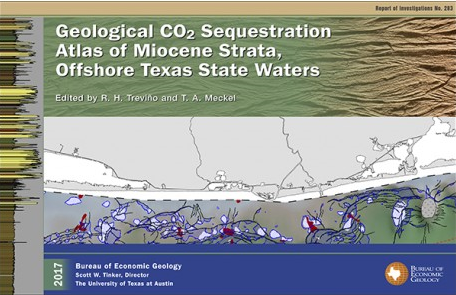
Commercial scale use of industrial CO2 for EOR is already underway in this region. To support massive expansion of CCUS, offshore storage resource development is needed for “backstopping” to provide assurance of large-scale, long-term continuation of storage through economic and regulatory uncertainty and to assure that carbon negative status can be maintained as the demand for CO2 is reduced though the EOR lifecycle (Nunez et al., 2017). Very large, low risk regional potential is documented by recently completed and ongoing sub-basin scale CO2 storage assessments covering the proposed near-offshore northwest Gulf of Mexico storage complex, as summarized by Carr et al., (2017), Lu et al., (2017), Meckel and Rhatigan, (2017), Meckel and Trevino (2105a, 2015b, 2016) and the extensive literature cited therein. Dozens of locations within this region demonstrate reservoir and trapping characteristics favorable for storage sites, and HI 10-L has been selected using NETL BPM as the candidate site. Near-offshore environments for CO2 storage have the advantage of a cooperative single land owner (State of Texas), simplifying leasing and long-term liability arrangements, lack of protected underground sources of drinking water (USDW), and reduced risks to public safety.
References
Carr, D.L., Wallace, K.J., Nicholson, A.J., Yang, C., 2017. Chapter 5: Regional CO2 Static Capacity Estimate, Offshore Miocene Saline Aquifers, Texas State Waters, in: Trevino, R.H., Meckel, T.A. (Eds.), Geological CO2 Sequestration Atlas of Miocene Strata, Offshore Texas State Waters. Bureau of Economic Geology, The University of Texas at Austin, pp. 37–46.
Lu, J., Carr, D.L., Rhatigan, J.L., Fifariz, R., 2017. Chapter 3: Evaluation of Lower Miocene Confining Units for CO2 Storage, Offshore Texas State Waters, Northern Gulf of Mexico, USA, in: Trevino, R.H., Meckel, T.A. (Eds.), Geological CO2 Sequestration Atlas of Miocene Strata, Offshore Texas State Waters. Bureau of Economic Geology, The University of Texas at Austin, pp. 14–25.
Meckel, T.A., Rhatigan, J.L., 2017. Chapter 2: Implications of Miocene Petroleum Systems for Geologic CO2 Sequestration beneath Texas Offshore Lands, in: Trevino, R.H., Meckel, T.A. (Eds.), Geological CO2 Sequestration Atlas of Miocene Strata, Offshore Texas State Waters. Bureau of Economic Geology, The University of Texas at Austin, pp. 7–13.
Meckel, T. A. (PI) and Trevino, R. H. (co-PI), 2015a: Project – “Offshore CO2 Storage Resource Assessment of the Northern Gulf of Mexico (TX, LA); Cooperative Agreement”: DE-FE0026083 (project in progress 2015-18).
Meckel, T. A. (PI) and Trevino, R. H. (co-PI), 2015b“Offshore CO2 Storage Resource Assessment of the Northern Gulf of Mexico (Upper Texas-Western Louisiana Costal Areas);” Kickoff meeting presentation, Nov. 10, 2015.
Meckel, T. A. (PI) and Trevino, R. H. (co-PI, 2016 “Offshore CO2 Storage Resource Assessment of the Northern Gulf of Mexico” presented at: Mastering the Subsurface through Technology Innovation and Collaboration: Carbon Storage and Oil and Natural Gas Technologies Review Meeting, U.S. Department of Energy, Fossil Energy and National Energy Technology Laboratory, August 17, 2016.
Nuñez-López, V., Gil-Egui, R., Gonzalez-Nicolas, A., Hovorka, S., 2017. Carbon Balance of CO2-EOR for NCNO Classification. Energy Procedia, 13th International Conference on Greenhouse Gas Control Technologies, GHGT-13, 14-18 November 2016, Lausanne, Switzerland 114, 6597–6603. https://doi.org/10.1016/j.egypro.2017.03.1803