
UNFCCC COP 31
Welcome to our COP 31 carbon capture and storage (CCS) information page. The following summarizes the Gulf Coast Carbon Center’s activities at the 2026 United Nations Framework Convention on Climate Change, Conference of Parties (UNFCCC COP), commonly referred to as COP 31. COP 31 will be held November 9–20, 2026, in Antalya, Türkiye.
For COP 31, the Gulf Coast Carbon Center (GCCC) is partnering with IEA Greenhouse Gas Research & Development Programme (IEAGHG), Carbon Capture & Storage Association (CCSA), and the International CCS Knowledge Centre to help circulate information about CCS at official side events and exhibits.
COP31 Special Events
- Friday, November 13, 2026 (18:30 – 20:00): Official UNFCCC Side Event in Room Orange, How can CCS help in addressing the requirements of CBAM initiatives, including for Türkiye? This event is co-organized by the University of Texas at Austin, the Bellona Foundation, the Carbon Capture and Storage Association (CCSA), the International CCS Knowledge Centre, and IEAGHG.
- Exhibit Booth 28, Blue Zone, November 16–19, 2026: Catch CCS experts from institutions with extensive research experience and technical training expertise in Carbon Capture and Storage (CCS). These institutions include UT Austin's Gulf Coast Carbon Center (GCCC), IEA Greenhouse Gas Research & Development Programme (IEAGHG), Carbon Capture & Storage Association (CCSA), and the International CCS Knowledge Centre.
We invite you:
- To click on links, watch videos, or download helpful CCS documents posted below
- To contact us, please reach out to Katherine Romanak if you have any questions
What is Carbon Capture and Storage (CCS)?
Carbon Capture and Storage (CCS)—also known as Carbon Capture, Utilization, and Storage (CCUS)—is a technology designed to capture carbon dioxide (CO₂) emissions from major industrial sources such as power plants, steel, cement, fertilizer, and chemical manufacturing. Once captured, the CO₂ is compressed and trans- ported—typically by pipeline or ship—and injected deep underground (between 0.8 and 3 kilometers) into secure geological formations for permanent storage. This process prevents human-made CO₂ from entering the atmosphere, ensuring it is safely and permanently contained underground. For local industries, CCS helps sustain jobs and attract investment by providing the infrastructure needed to achieve deep emissions reductions. It also drives the development of new expertise, supply chains, and resources that strengthen regional economies while supporting global climate goals.
- Did you know? CO₂ is stored 0.5 to 1.9 miles (0.8 to 3 km) below the surface, safely, and permanently.
- Learn about CCS and what needs to happen to make drastic reduction in emissions long term by researchers at The University of Texas at Austin, Bureau of Economic Geology, Gulf Coast Carbon Center (1.5-minute BEG GCCC video).
- What do we do after capturing large amounts of CO₂? How do we transport and store CO₂ underground? (~ 6-minute video from roads2removal.org)
- Explore the Carbon Capture, Utilization and Storage (CCUS) process, and the vital role these technologies play to reduce CO₂ emissions across a wide variety of essential industries. (~ 3-minute video: https://www.youtube.com/watch?v=GYlIYCHsh0o)
- Have you heard of STRATOS? STRATOS is one of the world's first commercial-scale direct air capture (DAC) facilities, designed to remove up to 500,000 tons of CO₂ annually. By integrating direct air capture with permanent geological storage,
STRATOS represents a major milestone in the development of durable carbon dioxide removal. The project is paving the way for deployment of DAC technology at scale, helping establish the infrastructure, technical expertise, and commercial pathways needed to address residual emissions. Click here to learn more. - Access previous presentations about offshore CCS projects presented at the International Workshop on Offshore Geologic CO₂ Storage to see how countries work towards specific issues, challenges, and opportunities towards developing their national programs.
- Visualize the 3-step process of capture, transport & storage CCS is a powerful tool in the race towards net-zero, helping industries like power plants and factories reduce their greenhouse gas emissions while continuing to produce the products we need at full capacity.
How does CCS happen?
- Tour the Boundary Dam Capture Facility in Saskatchewan, Canada (9-minute CCS Knowledge Center video)
- Discover how a Europe-wide CO₂ market can reduce storage costs by 20% from a CCSA report.
- What Industries are Major Emission Sources of CO₂? Each industry has different CO₂ emissions sources with varying CO₂ concentrations, leading to unique challenges faced by each industry when implementing CCS. Learn more about the complexities of carbon capture for the power, cement, oil & gas, and iron & steel industries.
- How do you conduct a national CO₂ Storage Assessment? Designed to help government bodies and policy makers with limited prior CCS experience find information, here is a guide that outlines the materials required and methodology to undertake initial national-scale storage assessments.
- Study an example of a stakeholder workshop, used by a small island developing state (SIDS) and how they began their CCS Journey. Local universities in Trinidad and Tobago held an international knowledge-sharing symposium on CCS for state, academic and private stakeholders to discuss national CCS development with technical support from international partners.
- Check out the Network of National CCUS Centers of Excellence (NNCCE) – The GCCC & IEAGHG launched a network to connect national institutions in the Global South; strengthen CCUS capacity; and improve access to technology transfer and climate finance mechanisms such as Climate Technology Centre and Network & the Green Climate Fund.
- De-risking CCUS: Click here to see a roadmap to bankable projects across Europe The study outlines a phased approach to developing Europe’s CCUS market, from enabling first-of-a-kind projects to creating cross-border networks and a competitive market.
- Survey CCS activities undertaken by the IEAGHG. This Annual Review outlines the work undertaken and produced by the IEAGHG including key achievements, networks, technical reports, information papers and presentations made by members of staff at external meetings.
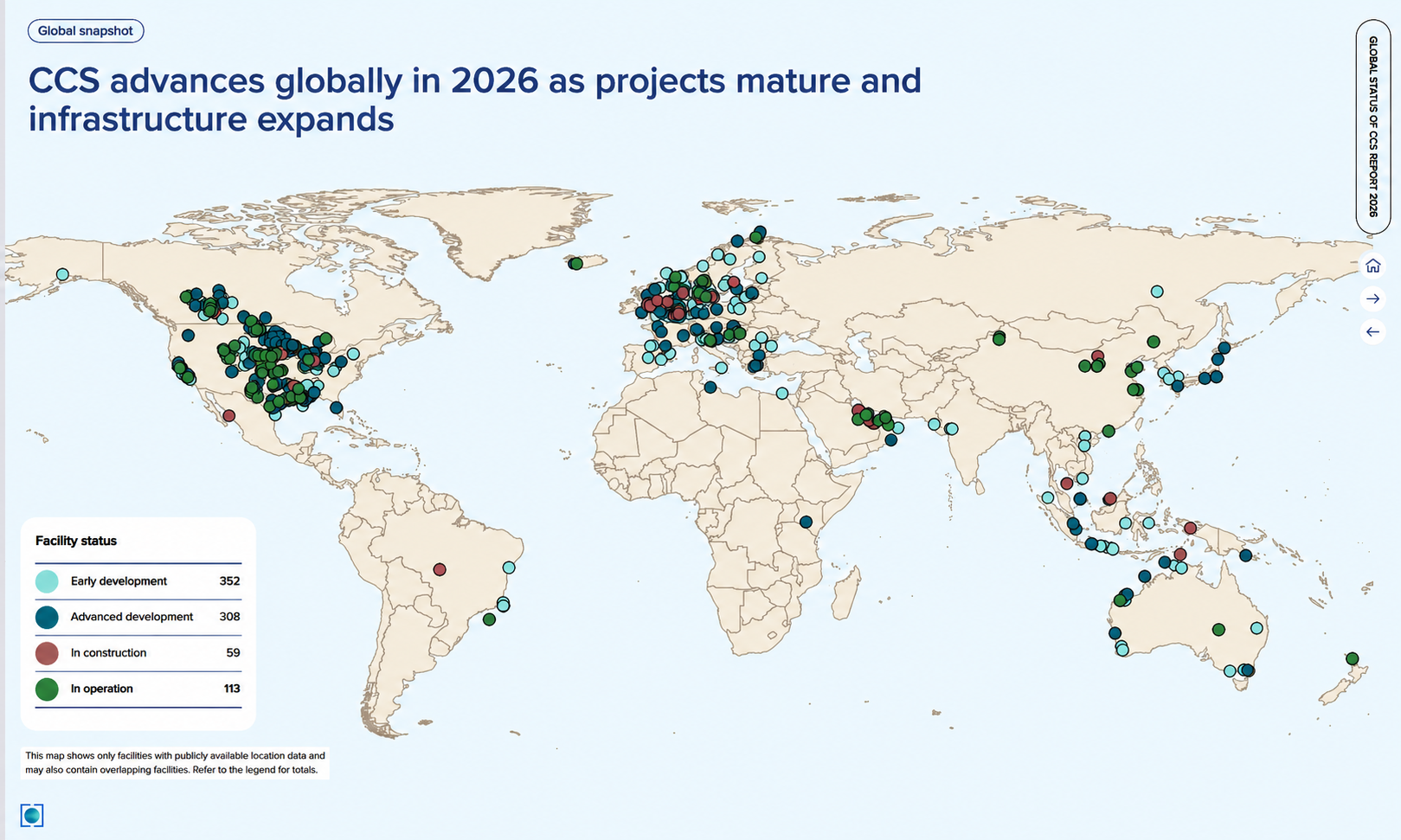
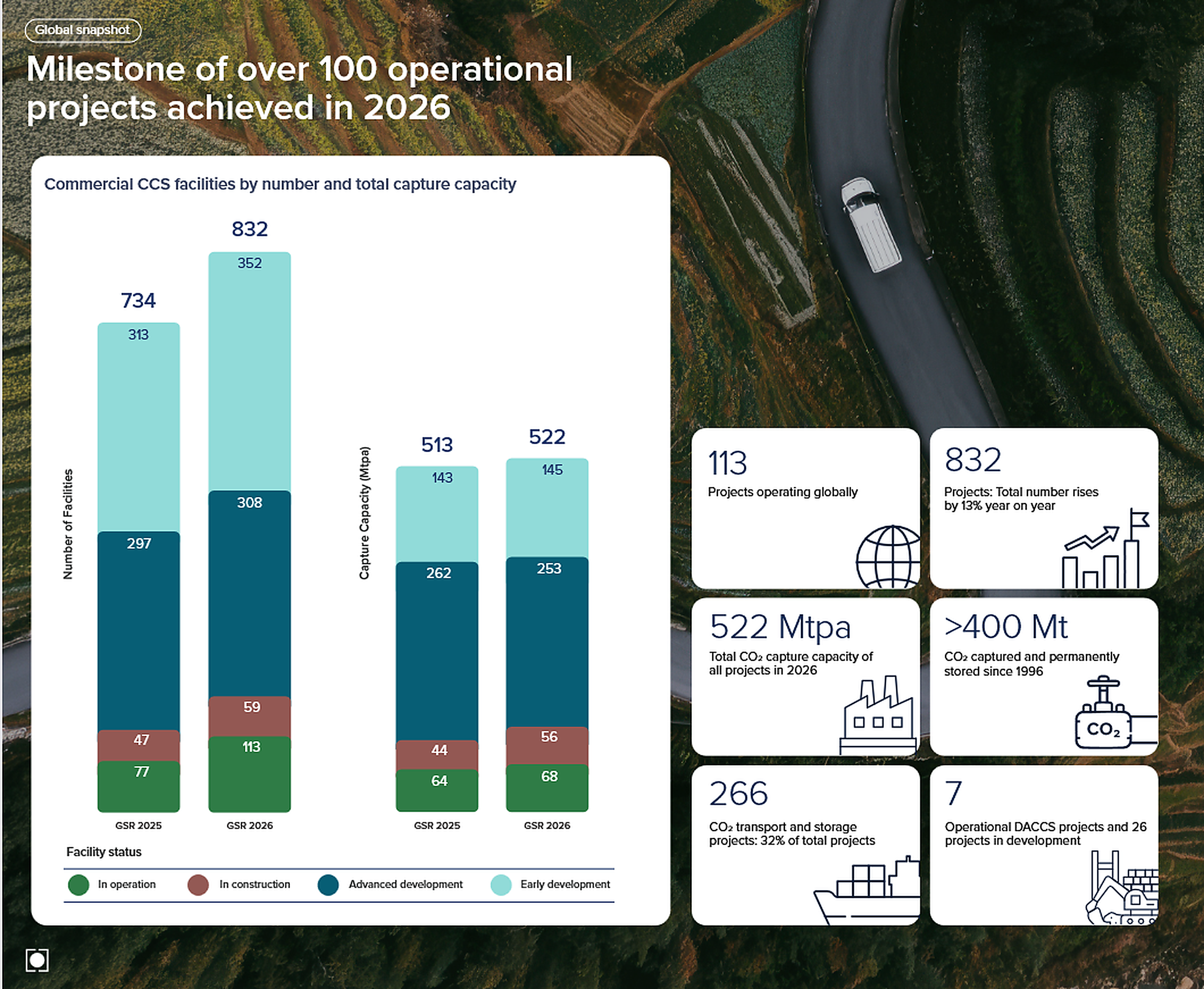
Where are CCS Projects today?
Educational Resources & CCS Information
Gulf Coast Carbon Center’s (GCCC’s) Research Consortium – Provides access to Carbon Storage Experts & CCS Training. The GCCC comprises world-renowned experts conducting cutting-edge research to ensure industry remains well-prepared. Consortium Sponsors gain year-round access to a password-protected portal featuring key materials, alongside biannual technical meetings tailored specifically to their needs. Backed by decades of research, our findings directly inform active carbon capture and storage (CCS) projects, regulations, and policies.
Beyond research, we are dedicated to educating the next generation of professionals, offering specialized training courses, outreach programs, and ongoing technical support when challenges arise. An annual membership fee of $75,000 includes full sponsor benefits and access to both annual technical meetings. Contact: D. van der Kolk for more information.
- Take a look at the Texas-Louisiana Carbon Management Community’s (TXLA CMC’s) CCS Comic Book for Educational Purposes - The GCCC’s TXLA CMC just created a CCS comic book geared for middle school education. These comic books were created for 12-to-14-year-old children in Texas to introduce them to greenhouse gases, carbon capture and storage (CCS). This comic book is FREE, available online to download, and print.
- Receive CCS educational and hands-on materials that are suitable for teachers (K-22) to help students explore carbon dioxide and CCS.
- See Canada’s 2026 CCS Statistics Canada’s statistics highlight current and planned carbon capture projects, transportation, storage infrastructure, national CO₂ achievements, and the available government incentives. CCUS is expected to have a critical role supporting Canada’s emissions reduction goals.
- The next Greenhouse Gas Control Technologies Conference will be held in Copenhagen, Denmark in October 2027. The Greenhouse Gas Control Technologies (GHGT) Series is the world's foremost conference in the field of CCS. It provides an opportunity for researchers, industry professionals and policymakers to share their knowledge and experience. Featuring over a hundred expert speakers from across the globe, GHGT gives you the opportunity to hear from thought leaders on a huge range of areas related to CCS. The conference covers topics such as carbon capture, transportation, storage, utilization, monitoring and more.
- Subscribe to the IEAGHG Newsletter to get the latest information on CCS.
- IEAGHG’s International CCS Summer School - This Summer School covers every aspect of CCS and presents the most recent information available. IEAGHG’s Summer Schools are the only CCS education program that truly has an international focus. With the location moving around the world, our program has now taken place in over 7 countries covering Europe, Australia, Asia and North America. Our summer school now has over 708 alumni representing over 60 countries with many moving on to successful careers within CCS industry and academia.
Other COP Activities
The Gulf Coast Carbon Center’s Katherine Romanak has been involved with many COPs through the years, but the following is an online summary of CCS materials and topics that we have collaboratively put together for previous COPs:

Contact your CCS Information Providers for More Information
- Gulf Coast Carbon Center, located at the Bureau of Economic Geology, at The University of Texas at Austin
- IEAGHG
- Carbon Capture & Storage Association
- International CCS Knowledge Center





Last Updated: October 30, 2026